
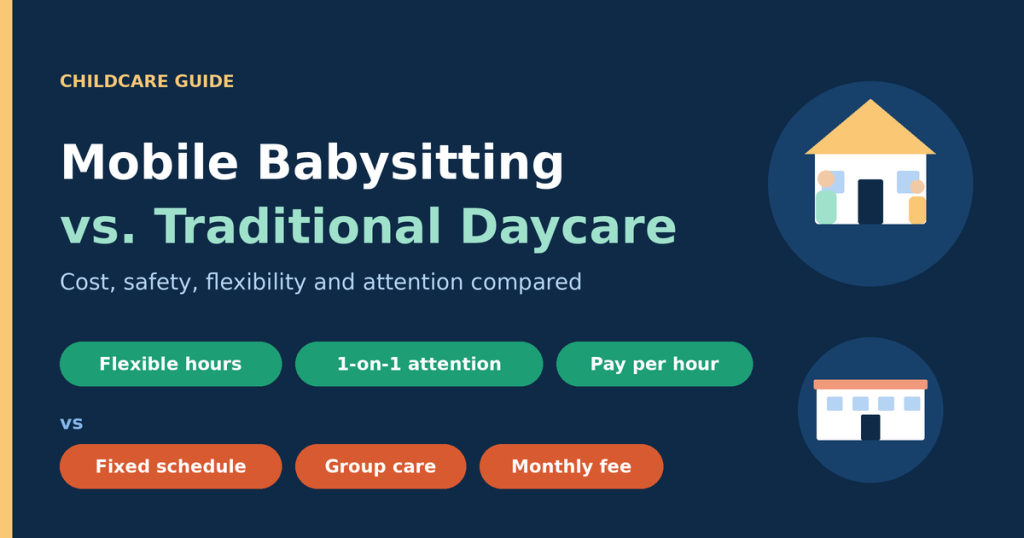
Choosing the right childcare can make a big difference in your family’s daily routine, travel plans, and peace of mind. Some parents need dependable care throughout the workweek, while others need a flexible option for special occasions, vacations, or a few hours away from home. Two options worth considering are mobile babysitting and traditional daycare.
Both provide valuable support for families, but they work in different ways. Understanding their benefits, schedules, and suitability can help you decide which option best meets your child’s needs. Whether you are planning a busy workday, attending a wedding, or enjoying a family getaway, the right childcare arrangement can help everyone feel more comfortable.
What Is Mobile Babysitting?
Mobile babysitting is a childcare service that brings a caregiver directly to your chosen location. Instead of taking your child to a childcare center, you can arrange care at a hotel, vacation rental, wedding venue, or other suitable location, depending on the provider’s service area.
A mobile sitter service can be particularly helpful when families are traveling or attending events where their usual childcare arrangements are unavailable. Parents can arrange care for specific hours, allowing them to participate in activities while their children receive individual attention.
For example, parents attending a wedding may want to enjoy the ceremony and reception without worrying about keeping young children entertained throughout the event. A mobile babysitter can supervise the children, organize age-appropriate activities, and help maintain familiar routines when possible.
Mobile babysitting may also be suitable for families visiting a new destination, attending a conference, or planning a special evening. Rather than relying on unfamiliar childcare arrangements, parents can organize support around their plans.
What Is Traditional Daycare?
Traditional daycare provides childcare at an established facility, usually according to a regular daily schedule. Children are cared for in a structured environment alongside others in their age group.
Many daycare centers offer consistent routines that include playtime, meals, rest periods, and learning activities. These routines can help children become familiar with their surroundings and develop social skills through regular interaction with other children.
Traditional daycare is often a practical option for working parents who need dependable care throughout the week. Families may appreciate having a consistent drop-off and pick-up schedule, an established childcare setting, and opportunities for children to participate in group activities.
However, daycare hours and enrollment requirements can limit flexibility. Families traveling away from home or attending an event may need to find another childcare solution.
Mobile Babysitting vs. Traditional Daycare: Key Differences
Although both options support children’s care and supervision, several differences can influence which arrangement works best for your family.
1. Location and Convenience
One of the main advantages of mobile babysitting is that care can take place at your location. This can reduce the need to travel to a childcare center, particularly when you are staying in a hotel or vacation rental.
Traditional daycare generally requires parents to bring their children to the facility and collect them at the end of the day. This arrangement may work well when the center is close to home or work, but it can be less convenient during vacations and special events.
2. Scheduling Flexibility
Flexible scheduling is another important consideration. A mobile babysitter may be available for a specific period, such as a wedding ceremony, evening reception, or daytime excursion, depending on the provider’s availability and booking policies.
Traditional daycare typically follows set operating hours and may require advance enrollment or a regular attendance commitment.
If you need occasional care rather than a daily arrangement, flexible babysitting services can offer a practical alternative. For recurring weekday care, however, daycare may provide the consistency your family needs.
3. Individual Attention
Mobile babysitting can provide more individualized attention when a caregiver is assigned to your child or family. This may help the caregiver follow your child’s usual routines, preferences, and activity needs.
Daycare environments generally involve groups of children and multiple caregivers. Group settings can encourage cooperation, sharing, and social development, although the amount of individual attention depends on staffing, group size, and the center’s policies.
When comparing options, ask about caregiver qualifications, supervision arrangements, and how each provider accommodates your child’s age and needs.
4. Activities and Social Interaction
Traditional daycare often includes planned activities designed to encourage learning, creativity, and interaction with other children. Regular participation can help children practice communication, teamwork, and problem-solving.
Mobile babysitting can also include engaging activities. Depending on the location, children’s ages, and booking arrangements, these might involve games, storytelling, crafts, or quiet activities before bedtime.
The main difference is that mobile babysitting can be arranged around a particular event or family schedule, while daycare generally provides a more consistent group environment.
5. Cost and Booking Requirements
The cost of childcare depends on several factors, including the number of children, their ages, the length of care, the location, and the provider’s pricing structure.
Daycare may offer a predictable recurring fee for families who need regular weekly care. Mobile babysitting may be more suitable for occasional needs, but hourly rates, travel charges, minimum booking periods, and peak-season demand can affect the total cost.
Before booking either option, request a clear estimate and confirm the services included. This makes it easier to compare the overall value rather than looking at the hourly rate alone.
When Should You Choose Mobile Babysitting?
Mobile babysitting may be the better choice when your family needs childcare outside its normal routine.
Consider this option if you are:
- Attending a wedding, reception, or family celebration.
- Traveling and staying at a hotel, resort, or vacation rental.
- Looking for childcare during a conference or special event.
- Planning an evening out and need care for a few hours.
- Seeking support that fits a specific schedule or location.
An on-demand babysitter may sound ideal when plans change, but availability is not always immediate. It is best to arrange care in advance, particularly during busy wedding seasons, holidays, and popular vacation periods.
Lisa’s Wedding Vacation Childcare specializes in on-site childcare for weddings, vacations, and special events. Its mobile childcare approach helps families arrange care at their event or accommodation rather than relying exclusively on a traditional childcare facility.
When Is Traditional Daycare the Better Option?
Traditional daycare may be more appropriate if you need childcare on most weekdays while working or managing other regular commitments.
It can offer children a familiar setting, consistent daily routines, and regular opportunities to interact with their peers. Parents may also find it easier to coordinate their schedules when their childcare arrangement remains the same each week.
When evaluating daycare centers, consider the staff’s qualifications, supervision policies, safety procedures, operating hours, and approach to meals and rest periods. Visiting the facility and asking questions can help you understand whether its environment suits your child.
For families who need both regular and occasional care, daycare and mobile babysitting do not necessarily have to be competing choices. You may be able to use daycare during the workweek and arrange a mobile sitter for vacations, weddings, or special occasions.
How to Choose the Right Childcare for Your Family
Start by identifying when, where, and how often you need childcare. A family seeking full-time weekday coverage will have different priorities from parents attending a destination wedding.
Next, consider your child’s age, temperament, routines, and comfort with new environments. Ask potential providers about caregiver screening, relevant training, emergency procedures, and communication with parents.
You should also clarify pricing, cancellation policies, booking requirements, and the number of children each caregiver will supervise. If care takes place at a hotel or event venue, confirm that the location is appropriate and that the necessary arrangements are in place.
Ultimately, the right choice is the one that balances your family’s schedule with your child’s comfort and safety.
Find Flexible Childcare With Lisa’s Wedding Vacation Childcare
Childcare should help your family enjoy everyday life and special occasions with greater confidence. Traditional daycare can provide a consistent routine for regular care, while mobile babysitting offers flexibility when your needs involve travel, weddings, or events.
If you are planning a celebration or vacation and need childcare at your location, Lisa’s Wedding Vacation Childcare can help you explore suitable arrangements. Contact the team to discuss your dates, location, children’s ages, and required hours so you can understand the available options.
With thoughtful planning and a childcare arrangement that fits your circumstances, you can enjoy your plans while ensuring your children receive attentive, age-appropriate care.
Frequently Asked Questions
1. What is the difference between mobile babysitting and traditional daycare?
Mobile babysitting brings a caregiver to your chosen location, such as a hotel, vacation rental, or event venue. Traditional daycare provides care at an established facility, usually according to a regular schedule.
2. Is a mobile babysitter a good option for weddings and vacations?
Yes. Mobile babysitting can be useful for wedding ceremonies, receptions, vacations, and other events where parents need temporary childcare. Availability and service arrangements should be confirmed before booking.
3. How do I find a reliable mobile babysitter near me?
When searching for a mobile babysitter near me, review the provider’s experience, caregiver screening procedures, relevant certifications, references, and safety policies. Confirm the service area and ask about availability before making a reservation.
4. Are flexible babysitting services available for a few hours?
Many providers offer short-term childcare, including hourly or event-based arrangements. Booking minimums, scheduling options, and pricing vary, so contact the provider to discuss your requirements.
5. Should I choose an on-demand babysitter or enroll my child in daycare?
Your decision depends on how often you need childcare. An on-demand babysitter may suit occasional events, travel, or evenings out, while daycare may be more practical for consistent weekday care. Some families benefit from using both options for different situations.